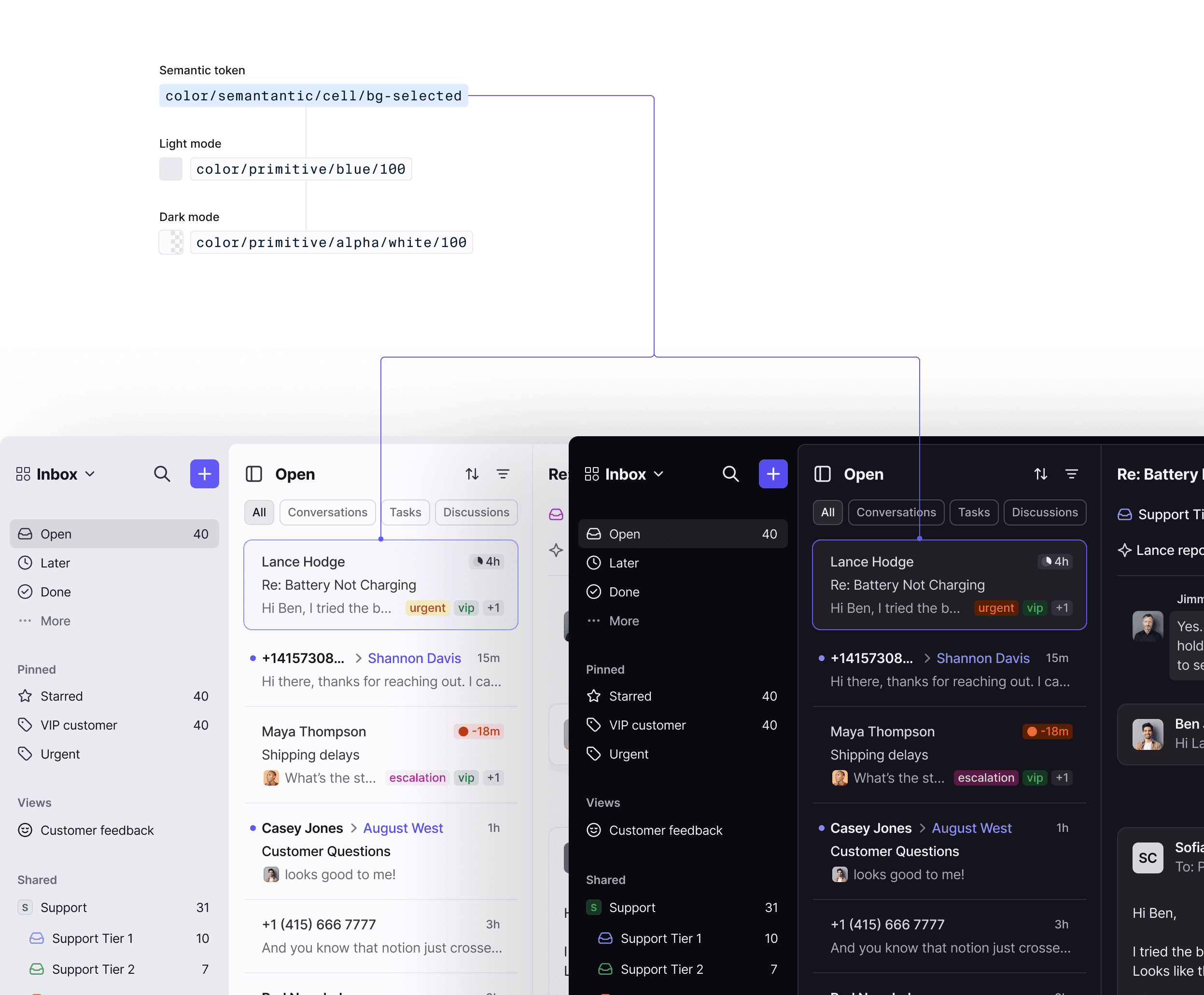
Ramping up on a conversation was critical for support agents, but tags and the header structure crowded the interface. We simplified the layout and made sections collapsible, so agents could focus in on the conversation.


Creating a conversation system that adapts to every variation without sacrificing readability and scannability.


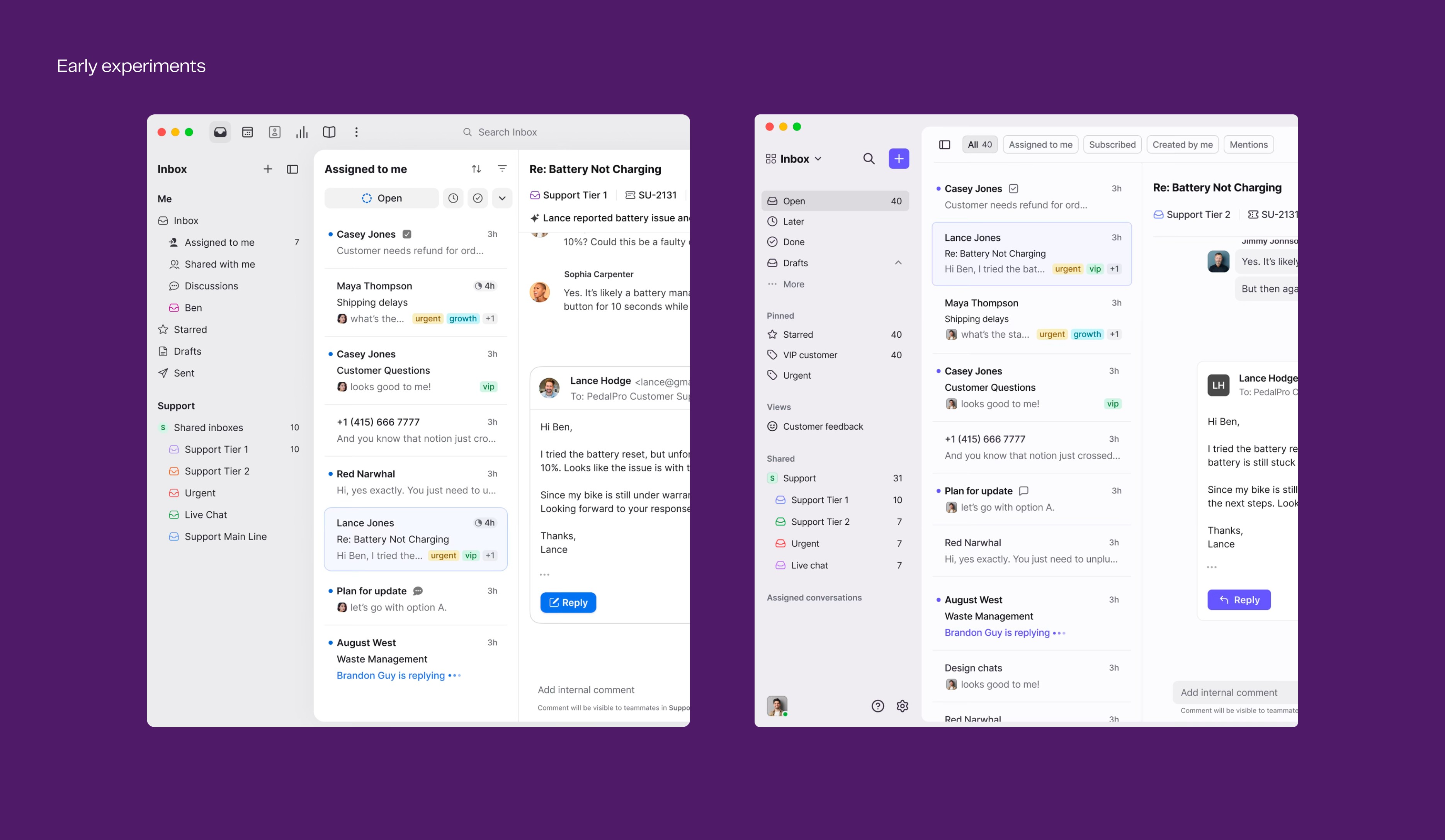
We introduced a new top-level tab system of Open, Later, and Done that better reflects how support agents triage conversation.
As the inbox evolved from a traditional model to ticketing with more customisable statuses, the old structure caused conversations to get lost.
We explored a new way of working through the inbox, running sessions with customers and internal support teams to find where it broke and where it could open up new ways of working.
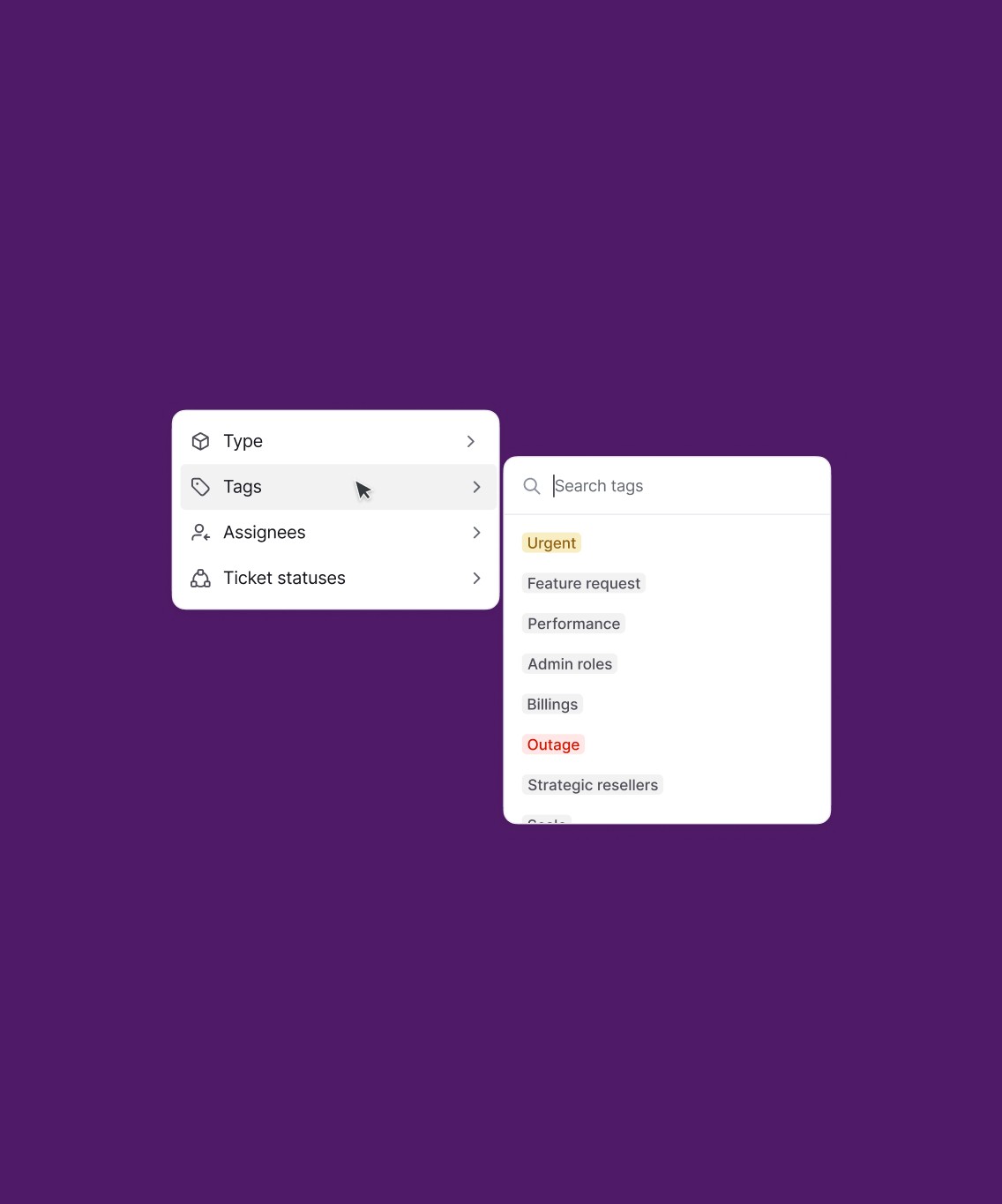
Creating a consistent dropdown pattern that reduced clicks and unlocked more powerful filtering in the inbox and across other areas of the product.
Laying the foundation for an AI assistant that has full customer context surfacing how issues have been resolved previously and helping generate a reply.

Establishing a new visual style and system that could be used across all of Front.